
Best Offline Android Games That Play Great Without WiFi or Data
When your commute dips into a tunnel or a flight mode kicks in, your game library doesn’t have to vanish. Offline android games are installed directly on your device, meaning they run entirely without an internet connection after the initial download. You simply tap the app icon, and the game loads from your phone’s storage, letting you play anywhere without buffering or dropped sessions. This gives you a reliable escape during dead zones, battery-saving flights, or quiet moments when a data signal is simply unavailable.
Why Play Without a Connection? The Real Benefits of Going Offline
Playing offline Android games removes the dreaded dependency on Wi-Fi or mobile data, meaning your commute through a tunnel or a remote campsite never interrupts your session. You get instant loading times and zero lag spikes, because there’s no server waiting to respond to your taps. More importantly, going offline shields you from forced ad breaks that often require a connection, letting you stay immersed in the gameplay loop without interruption. It also saves your battery, since constant network pings drain power fast. Ultimately, going offline gives you complete control over your gaming moment—no notifications, no buffering, just pure, uninterrupted fun on your own schedule.
Battery Life and Data Savings You’ll Notice Immediately
Offline games are a sneaky win for your phone’s stamina. Because there’s no constant handshake with cell towers or Wi-Fi, your radio stays quiet, so offline gaming battery savings are noticeable almost right away—you can lose just a few percent over an hour instead of ten or more. Your data cap also breathes easy, as every level, cutscene, and update is already bundled in the APK; no surprise background patches or ad-heavy streams. You’ll stop watching your meter crawl downward during a commute. Charge anxiety fades, and your monthly allotment stays intact, letting you play longer without hunting for a charger or hotspot.
- No network polling means your battery drains slower during play sessions.
- Zero ads or cloud syncs mean zero hidden data usage.
- Your phone stays cooler, reducing battery stress from heat.
- You can play for days on a single charge if you stick to offline titles.
Zero Lag, No Interruptions: How Offline Play Keeps You in the Zone
When you’re deep in a boss fight, the last thing you need is a loading spinner or a ping spike. Offline Android games eliminate that entirely, so your actions register the instant you tap. This zero-lag gameplay for focused mobile sessions keeps your flow state unbroken, whether you’re on a subway or in a dead zone. Without background data syncing, there are no surprise ads or updates yanking you out of the action. *The absence of network waits turns even a five-minute break into a genuinely immersive escape.*
Q: Does zero lag mean offline games run worse on old phones?
A: Not at all—since there’s no network overhead, the game’s code runs directly on your device, so performance often feels snappier than online titles.
Privacy and Focus: What You Gain When Your Game Isn’t Watching You
When your game isn’t watching you, offline play reclaims your attention as a private resource. Without telemetry, ad trackers, or session loggers, no algorithm adjusts difficulty to prolong engagement or harvest your behavioral patterns. You gain uninterrupted immersion: no pop-up consent walls, no “play to earn” surveillance loops, and no silent background data syncing. Focus sharpens because the only feedback loop is between you and the pixels—not you, a server, and a monetization engine.
- Launch the game in airplane mode.
- Disable its internet permission in Android settings.
- Play knowing your playtime, habits, and location stay on-device.
This turns every session into a deliberate act of digital privacy, where losing yourself in gameplay means no one else finds you.
What Kinds of Games Actually Work Without Wi-Fi?
Offline Android games that work without Wi-Fi fall into distinct categories. Puzzle games like Sudoku, chess, or match-3 titles are fully playable offline since they rely on local logic. Similarly, roguelike deckbuilders and turn-based strategy games function completely without a connection because all content is pre-loaded. Racing games and platformers also work offline, though they may lock multiplayer or leaderboard features. Open-world sandbox games like Minecraft or Terraria are excellent offline choices, as they generate worlds locally. Roguelites with procedural generation offer nearly infinite replayability without needing online servers, unlike live-service titles that require periodic validation. Avoid games labeled “online co-op” or “MMO,” as these will fail to launch or crash at the menu. Always check the Play Store description for “requires internet” warnings before downloading.
Puzzle and Strategy Titles That Respect Your Thinking Time
For offline Android gaming, puzzle and strategy titles that respect your thinking time eliminate the pressure of real-time connectivity, letting you pause mid-match without penalty. Turn-based tactics like *Slay the Spire* or *Mini Metro* shine here, as their mechanics rely on deliberate planning rather than twitch reflexes—a boon when your connection drops mid-commute. These games save your progress locally, so a sudden network loss never corrupts a half-solved logic grid. Uninterrupted cognitive pacing is the core advantage: you can slowly rotate a block or re-evaluate a resource chain for minutes, since no server-side timer forces your hand. This makes them ideal for flights, tunnels, or any dead zone where calm reasoning is your only resource.
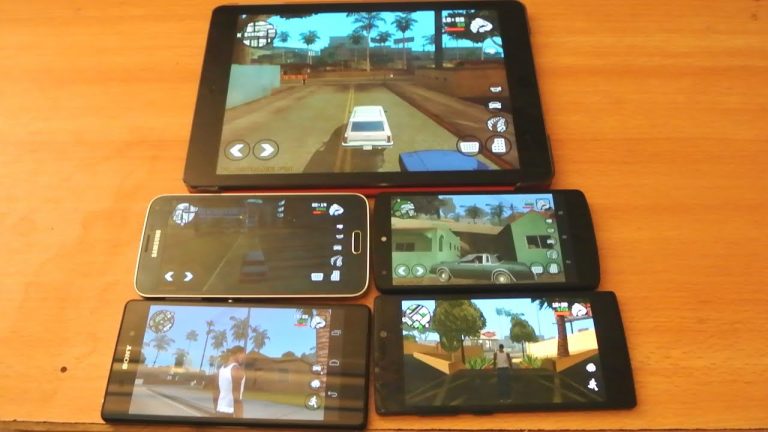
- Local save files let you close an app and resume a complex puzzle days later, exactly where you left off.
- Asynchronous or purely offline modes remove leaderboard refresh lag, so your strategic score is computed instantly on-device.
- No ads or popups that require a network to skip—your deliberative flow stays intact.
- Procedural puzzles (e.g., *Minesweeper* variations) generate fresh challenges without needing a server download.
Action and RPGs Built for Long Commutes or Flights
For long commutes or flights, action and RPGs built for offline Android play deliver dense, session-friendly progression without demanding a signal. Choose offline action RPGs with auto-save checkpoints, like *Titan Quest* or *Eternium*, which let you pause mid-dungeon and resume after a layover. Roguelike action titles such as *Dead Cells* thrive here because each run fits neatly into a 30-minute window, while open-world RPGs like *Baldur’s Gate: Dark Alliance* offer linear chapters ideal for multi-hour stretches. Avoid MMO-style grinders that gate content behind server checks; instead, prioritize games with full preloaded data. Battery drain is your real enemy, so favor titles with adjustable graphics over flashy particle effects. A table helps: pure action games excel at quick bursts, while RPGs reward longer, narrative-driven sessions.
Simulation and Sandbox Experiences That Run Fully on Your Device
Simulation and sandbox games are the ultimate offline Android companions because they build entire worlds inside your phone’s storage. Offline sandbox games on Android let you craft, build, or manage systems without ever needing a data signal—your device becomes the server. Think of farming simulators where crops grow in real time, or city-builders that pause when you close the app. Physics-based playgrounds, like bridge builders or vehicle testers, react purely to local processing, so lag never happens. Since all assets and logic are pre-loaded, you get instant load times and zero pay-to-win interruptions. It’s pure, self-contained creativity for commutes or remote cabins.
- No cloud saves required—progress stays on your device
- Full game state (maps, physics, inventories) works after airplane mode
- Ideal for battery-saving play, as no background network polling occurs
How to Pick the Right Offline Game for Your Device and Style
Picking the right offline Android game starts with checking your device’s storage and RAM—a heavy 3D title will stutter on 2GB devices, so skim the required specs before downloading. Next, match the genre to your play style: if you crave quick bursts, choose roguelikes like Dead Cells, but for deep immersion, pick a story-driven RPG that saves progress offline. Test the first level with airplane mode on to see if the game truly works without a signal. Also, read recent reviews from users with similar phone models—they reveal battery drain or crashes. Finally, pick games with adjustable graphics settings, letting you tone down effects for smoother play. Trial a few free demos; the best fit is one you’ll launch again tomorrow.
Matching Game Size and Graphics to Your Phone’s Storage and RAM
Before downloading, check the game’s install size against your free storage—a 10GB RPG will choke a 64GB phone fast. Pair that with RAM: matching game size and graphics to your phone’s storage and RAM means reading the “required RAM” in the Play Store listing. If you have 4GB, skip heavy 3D open-world titles. Instead, look for 2D or pixel-art games under 500MB, which load smoothly and leave room for saves. Lightweight builds also keep your battery cool during long offline sessions.
- Leave 20% of your storage free after install for updates and cache.
- Choose “low” or “standard” graphics presets if your RAM is 3GB or less.
- Check the app’s “device compatibility” section—it flags RAM limits automatically.
Reading In-App Purchase Signs: Which Offline Games Stay Truly Free

Scrutinize the store listing before downloading: a “Contains Ads” tag often signals a business model that may pressure purchases, while “In-App Purchases” alone is ambiguous. Check whether the primary currency is earned through gameplay or only buyable with real money—titles like *Shattered Pixel Dungeon* or *Dungeons of Dreadrock* offer full campaigns with zero microtransaction menus. Look for a “Premium” or “Paid” badge, which usually guarantees a one-time cost for all content. Beware of energy systems, loot boxes, or cosmetic packs that gate progression, even in offline modes. Finally, read recent reviews on the device itself to spot complaints about paywalls after level ten. A truly free offline game has no store button on its main menu.
To stay truly free, verify that no in-app purchase option exists in the menu, no content is locked behind currency, and the game explicitly states “no ads and no purchases.”
Checking for Replay Value: What Keeps a Downloaded Game Fun for Months
When evaluating an offline Android game for longevity, inspect its procedural generation or branching narrative systems, as these create fresh runs without new downloads. A roguelike with randomized maps, permadeath, and unlockable modifiers offers hundreds of distinct sessions, while a puzzle game with daily-challenge logic (even offline, using device clock) forces evolving strategies. Check for meta-progression—currency, skill trees, or cosmetic unlocks—that persists across restarts, giving every failed attempt tangible weight. A game that respects your time with short, variable sessions often outlasts one with endless, repetitive grinding. Look for hidden secrets, alternative endings, or score-attack leaderboards (local) that reward mastery. Test the first 30 minutes: if the core loop changes meaningfully by hour five, replay value is solid. Avoid static level packs; demand systems that react to your choices.
Getting the Most Out of Your Downloaded Library
To truly maximize your downloaded library, treat your offline Android games as a curated collection, not a digital pile. Organize them into folders by genre or play style, ensuring you can instantly jump into a title that matches your mood, whether you’re on a plane or in a dead zone. Aggressively uninstall games you’ve finished, as this frees storage and reduces background data, keeping your core favorites running smoothly. Before traveling, test each game in airplane mode to confirm it loads without a hitch, and proactively manage save files via local backups to prevent losing progress. By routinely pruning and rearranging, you’ll transform a cluttered storage space into a responsive, tailored gaming arsenal. This approach guarantees that offline gaming becomes a seamless experience, and your downloaded library stays fully optimized for instant, uninterrupted play.
Optimizing Settings to Prevent Overheating and Crashes During Long Sessions
For marathon offline gaming sessions, preventing overheating and crashes starts by dialing back unnecessary visual flair. Drop the frame rate cap from 60 to 30 in the game’s settings—your phone barely renders half the frames, so the GPU runs cooler. Lower resolution scaling or turn off shadows and anti-aliasing; these are the biggest heat generators. Enable “Battery Saver” mode, which quietly throttles background processes and limits CPU boost spikes. Also, disable in-game “high performance” or “max quality” presets that default to aggressive multitasking. Finally, set a screen brightness below 70% and background data off—both reduce wasted energy that translates into thermal buildup. These tweaks keep sessions stable without sacrificing fun.
Managing Updates and DLC When You’re Only Online Occasionally

For offline Android games accessed sporadically, **managing updates and DLC while offline** requires a deliberate pre-connection routine. Before you lose signal, open the game’s store page and force-check for pending patches; downloading them over Wi-Fi prevents mid-session interruptions. Similarly, purchase and download all additional content—maps, campaigns, or cosmetic packs—while connected, since the game won’t queue them for later. After updating, launch the game once online to let it verify file integrity, then toggle airplane mode to confirm the new version runs without a server handshake. For large DLC, prioritize downloading the core files you need for your next offline session, and skip optional extras until you’re next connected.
- Schedule updates for the end of a Wi-Fi session, not the start, so verification finishes before you disconnect.
- Keep a list of which DLC requires an online “unlock” versus which is stored locally; only download the latter for offline use.
- If the game supports split APK or expansion files, manually back up the updated data folder to an SD card for reinstallation after a android games review factory reset.
- Check the game’s version number against the latest release notes before going offline to avoid loading a save from an incompatible patch.
Using Offline Mode Features on Multiplayer-Looking Titles
Many titles that appear to demand a connection actually hide robust solo play. Before uninstalling a “multiplayer-only” game, dive into its settings menu and hunt for terms like “offline mode,” “practice,” or “tutorial.” You’ll often find the entire campaign, bot matches, or even full story content accessible without Wi-Fi. This works because many developers leave the core gameplay engine intact, simply swapping live opponents for AI. Crucially, launch the app once while connected, complete the initial download of assets, then toggle airplane mode. This trick unlocks a surprisingly deep experience, letting you grind levels or master mechanics at your own pace. Don’t let a lobby screen fool you—your downloaded library often hides a complete offline campaign behind a deceptive login prompt.
Common Questions and Fixes for Offline Gaming Problems
Why did my offline game reset? Usually, your save data got cleared when you cleared the app’s cache or storage—so always back up via the game’s cloud save feature before doing that. Seeing a black screen after an update? Force-stop the app, then clear its cache (not data) and relaunch. For stuck loading screens on offline android games, make sure your device has enough free RAM by closing background apps. If sounds glitch, check that your phone isn’t in battery saver mode, which can throttle performance. The classic fix for most offline gaming problems is reinstalling the APK, but first confirm you’ve saved progress to your Google Play Games account.
What to Do When a Game Requires a One-Time Internet Check
If your offline Android game insists on a one-time internet check, connect to any available Wi-Fi or mobile data, then launch the game. After the verification completes, you can immediately disable the connection and play offline indefinitely. For a failed check, toggle airplane mode on and off to reset the network stack, then retry. If errors persist, clear the game’s cache via Settings > Apps—this often resolves corrupted verification tokens. As a last resort, reinstall the game while online, as the license flag is stored locally. This one-time verification process rarely repeats unless you clear app data or switch devices. Follow this sequence:
- Enable internet and open the game.
- Wait for the “Verified” prompt.
- Turn off data/Wi-Fi immediately.
- Restart the game to confirm offline access.
Why Some Downloaded Games Still Drain Data and How to Stop It
Even after a full download, Android games often connect for ad refreshes, leaderboard syncs, or license checks, which can silently consume megabytes. To stop this, open the game’s settings and enable “offline mode” or disable background data specifically in your system’s App Info panel. Also, revoke storage and network permissions for games you rarely play, since many request them unnecessarily. Not every offline game truly respects airplane mode, so force-stopping the app after each session is the most reliable guard. For persistent offenders, use a firewall app to block Wi-Fi and mobile data entirely. Stopping background data in Android’s settings is the direct fix that halts these hidden drains without uninstalling.
- Disable “auto-sync” and “auto-update” inside the game’s own settings menu.
- Set the game to “restrict background data” under Apps → Mobile data & Wi-Fi.
- Turn on airplane mode while playing, then force-stop the app before turning it off.
How to Find Hidden Gems That Never Advertise Their Offline Capability
To uncover hidden gems that never advertise offline play, check the game’s **permissions list**—titles lacking internet or network access requests are often fully playable without Wi-Fi. Filter Google Play by “offline” in your specific genre, then cross-reference reviews mentioning airplane mode. For deeper digging, sideload APK files and test them after toggling flight mode, since store pages may omit offline details. Look for older ports or paid titles with no live-service features, as these typically function standalone.
- Search developer forums for “offline mode” threads before downloading.
- Use third-party app viewers that expose connectivity requirements.
- Download a demo or free version, then disable all radios to verify.